Mobile UX Support Case移动端 UX 辅助案例

FitTogether

Reducing the gap between intention and first workout, then using progress and social motivation to bring users back. 降低用户从“想运动”到“开始运动”的阻力,并通过进度反馈和社交激励支持持续行为。

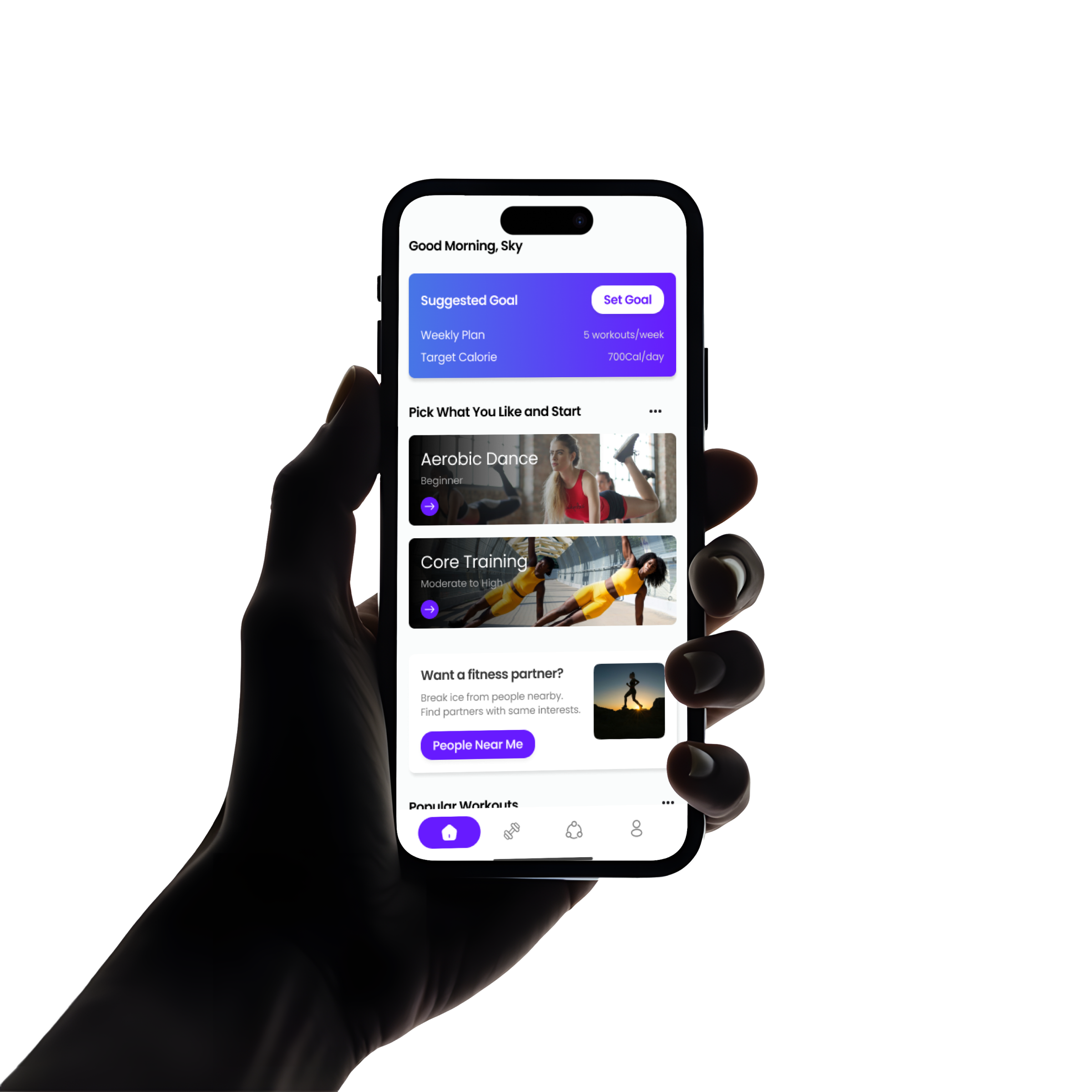
FitTogether hand-held mobile app mockup
Role角色End-to-end concept UX — research framing, IA, flows, UI概念项目全流程 UX —— 研究框架、信息架构、流程、界面
Format形式Self-driven concept project自驱概念项目
Use用途UX process & mobile UI craft — not an AI or launched-impact case证明 UX 流程与移动端 UI craft —— 非 AI、非上线成效案例
Status状态Archived from previous portfolio从旧作品集整理归档
01 — Overview01 — 项目概览

A concept built around one problem: staying with the habit.一个围绕单一问题做的概念项目:怎么坚持下去。

A self-initiated project. Rather than jump straight to screens, I scoped it end to end — an AI-driven fitness app that blends personalized training, social motivation, and progress tracking to turn intent into a habit that lasts. 这是个自驱项目。与其一上来就画界面,我把它从头到尾走了一遍——一款 AI 驱动的健身 App,用个性化训练、社交激励和数据追踪,让“想运动”变成能坚持的习惯。

Design Methodology设计方法
01 →

Discovery发现洞察

User research, competitive benchmarking用户研究、竞品分析

02 →

Strategy策略制定

Design strategy, information architecture设计策略、信息架构

03 →

Execution设计执行

User flows, features, screens核心流程、页面及功能设计

04

Validation成果验证

Data analysis, design for iterations数据分析、设计迭代

Success measured by如何衡量成功
Weekly Active Workouts周均有效训练次数
User stickiness and core product value反映用户粘性和产品核心价值
Premium Conversion Rate付费会员转化率
Health of the business model衡量商业模式的健康度
Monthly Retention Rate次月留存率
Long-term product appeal体现产品对用户的长期吸引力
02 — Who it's for02 — 为谁设计

Two users anchored every later decision.两个用户,撑住了后面每一个决策。

A busy professional and an active parent. They kept the design honest about whose friction I was actually solving — so features earned their place against a person, not a hunch. 一个忙碌的上班族,一个要带娃的家长。他们让设计始终对得上“到底在解谁的麻烦” —— 每个功能都得对着一个具体的人站住脚,而不是凭感觉。

Concept personas · working assumptions, not field research概念用户假设 · 非真实用研
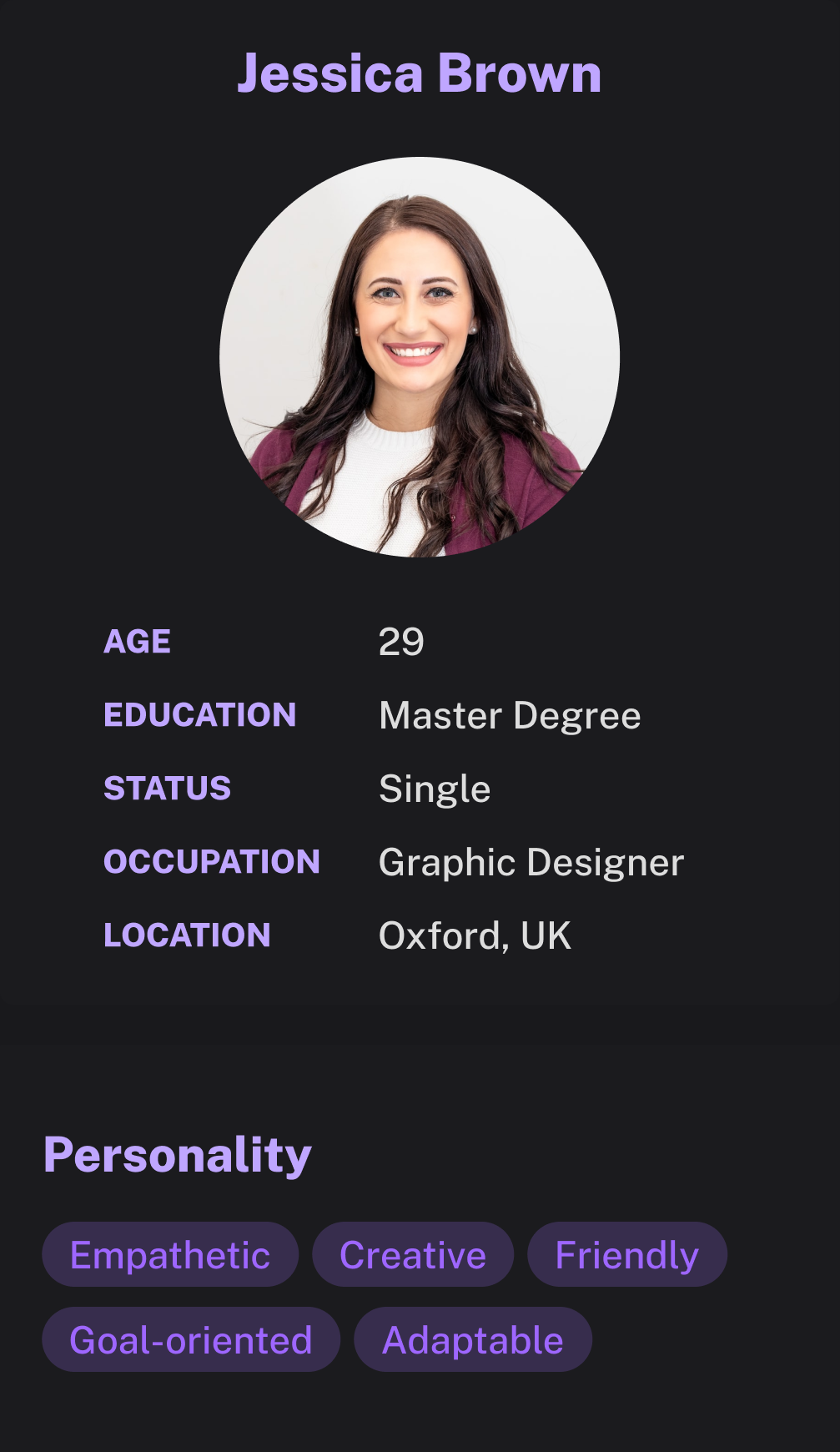
Persona — Jessica Brown, the busy professional

“I love staying active, but it's hard to stick to a routine on my own. I miss the social aspect of working out with others and need a way to stay connected and motivated.”“我喜欢保持活力,但一个人很难坚持。我想念和别人一起运动的那种社交感,需要一个方式让自己有连接、有动力。”

Brief story简述

Jessica is a 29-year-old graphic designer at a marketing agency, living alone in a small city apartment. She has always been moderately active — yoga, the occasional run — but a sedentary job and busy schedule make a consistent routine hard. Working remotely, she feels isolated and is looking for ways to stay fit and stay connected.Jessica,29 岁,在一家营销公司做平面设计,独居在小城市的小公寓。她一直算比较活跃——瑜伽、偶尔跑步——但久坐的工作和忙碌的节奏让她很难维持规律运动。远程办公让她有些孤立,她在找既能保持身材、又能建立连接的方式。

Goals目标
  • Maintain fitness:保持运动: build a consistent routine for health and energy.建立规律,改善身体和精力。
  • Social connection:社交连接: meet new people and build a network.认识新朋友,建立社交圈。
  • Mental well-being:心理健康: reduce stress through regular activity.通过规律运动缓解压力。
  • Stay motivated:保持动力: find external accountability and support.寻找外部督促和支持。
Frustrations痛点
  • Time management:时间管理: work crowds out regular exercise.工作挤占了规律运动的时间。
  • Social isolation:社交孤立: remote work cut her social interaction.远程办公减少了社交机会。
  • Lack of motivation:缺乏动力: hard to stay consistent alone.一个人很难坚持。
  • Limited space:空间有限: a small apartment limits what she can do at home.小公寓限制了在家能做的运动。
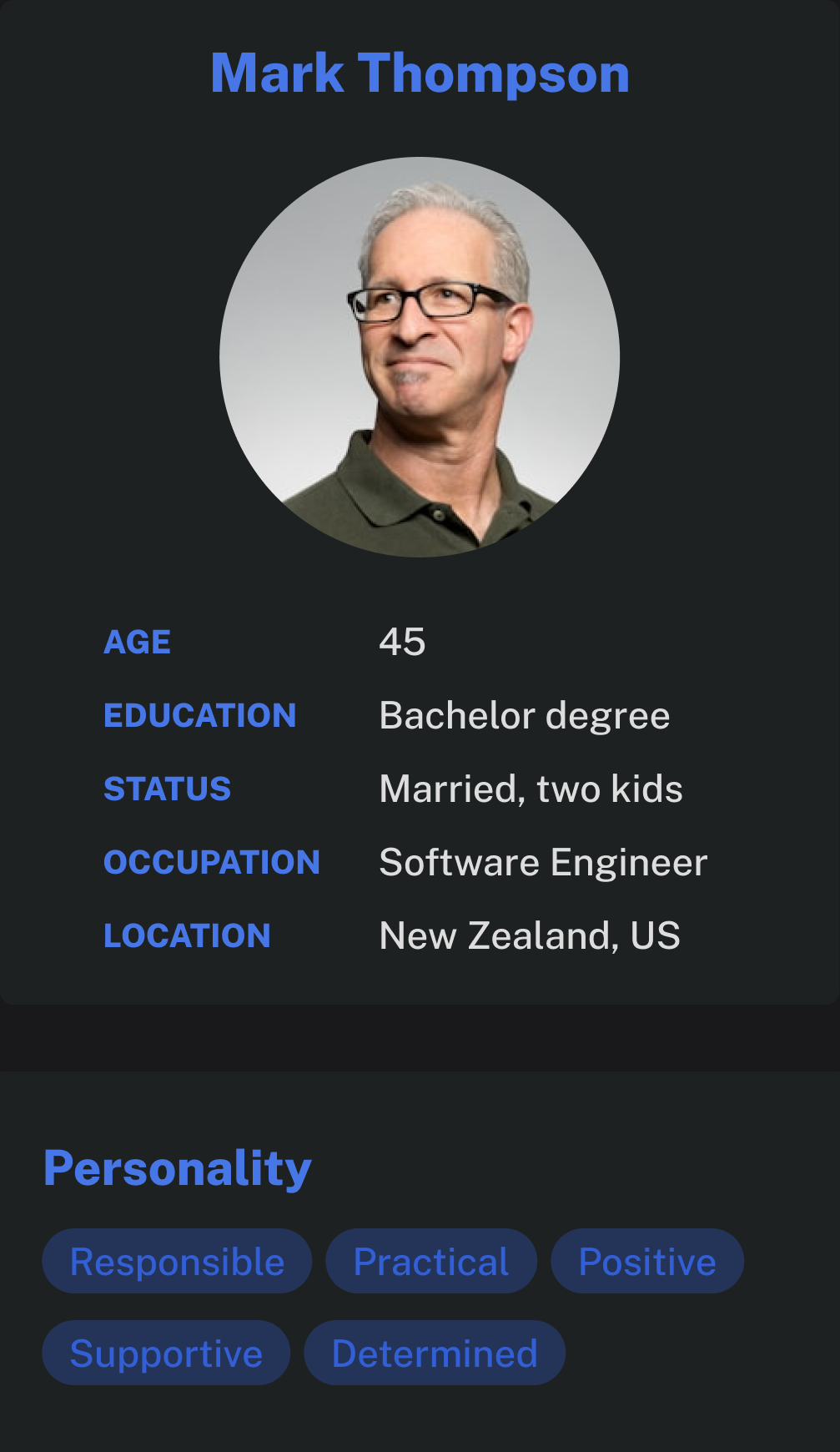
Persona — Mark Thompson, the active parent

“I want to stay healthy and active, but it's hard to find the time with work and family. It would be great to find a way to combine fitness with spending time with my kids.”“我想保持健康和活力,但工作和家庭让我很难抽出时间。要是能把健身和陪孩子的时间结合起来就好了。”

Brief story简述

Mark is a 45-year-old software engineer living in the suburbs with his wife and two kids, aged 8 and 12. He has always been fairly active, but a demanding job and family responsibilities make a consistent routine difficult. He values quality time with his family and wants to fit fitness into that busy life rather than around it.Mark,45 岁,软件工程师,和妻子、两个孩子(8 岁和 12 岁)住在郊区。他一直比较活跃,但繁重的工作和家庭责任让规律运动变得困难。他看重和家人相处的时间,想把健身融进忙碌的生活,而不是挤在生活之外。

Goals目标
  • Stay fit and healthy:保持健康: keep up the energy to match his kids.有精力跟上孩子。
  • Family involvement:家庭参与: work out with family, set a healthy example.和家人一起运动,树立健康榜样。
  • Stress relief:释放压力: use fitness to unwind from work.用运动从工作中解压。
  • Social interaction:社交互动: connect with other dads and families.和其他父母、家庭建立连接。
Frustrations痛点
  • Time constraints:时间紧张: work and family leave little room to exercise.工作和家庭几乎不留运动余地。
  • Family commitments:家庭责任: responsibilities limit personal fitness time.限制了个人健身时间。
  • Motivation:动力: hard to stay driven without a routine or community.没有规律或社群很难坚持。
  • Family-friendly options:亲子友好: needs activities that work for adults and kids.需要适合大人和孩子一起的活动。
03 — Competitive03 — 竞品分析

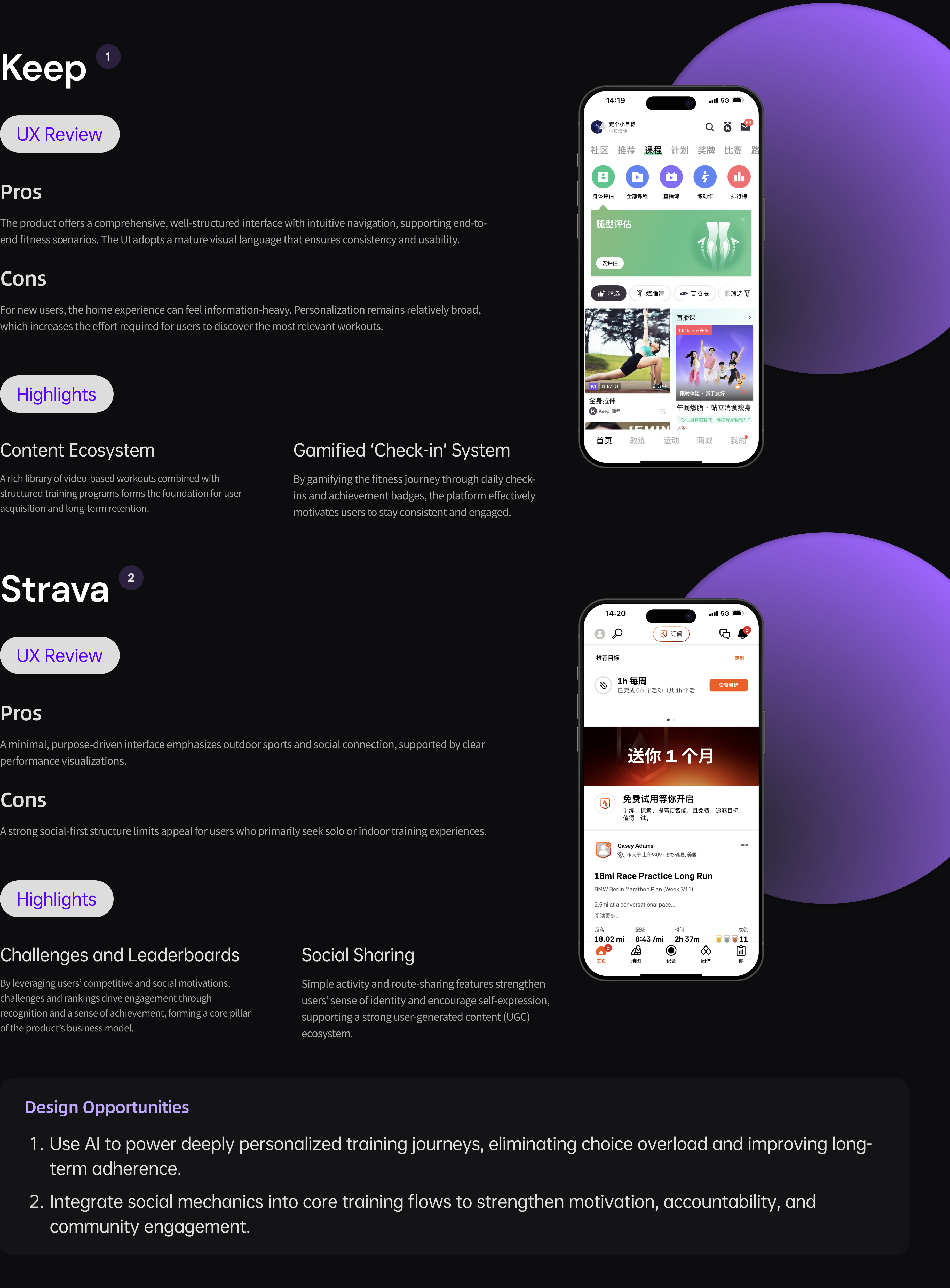
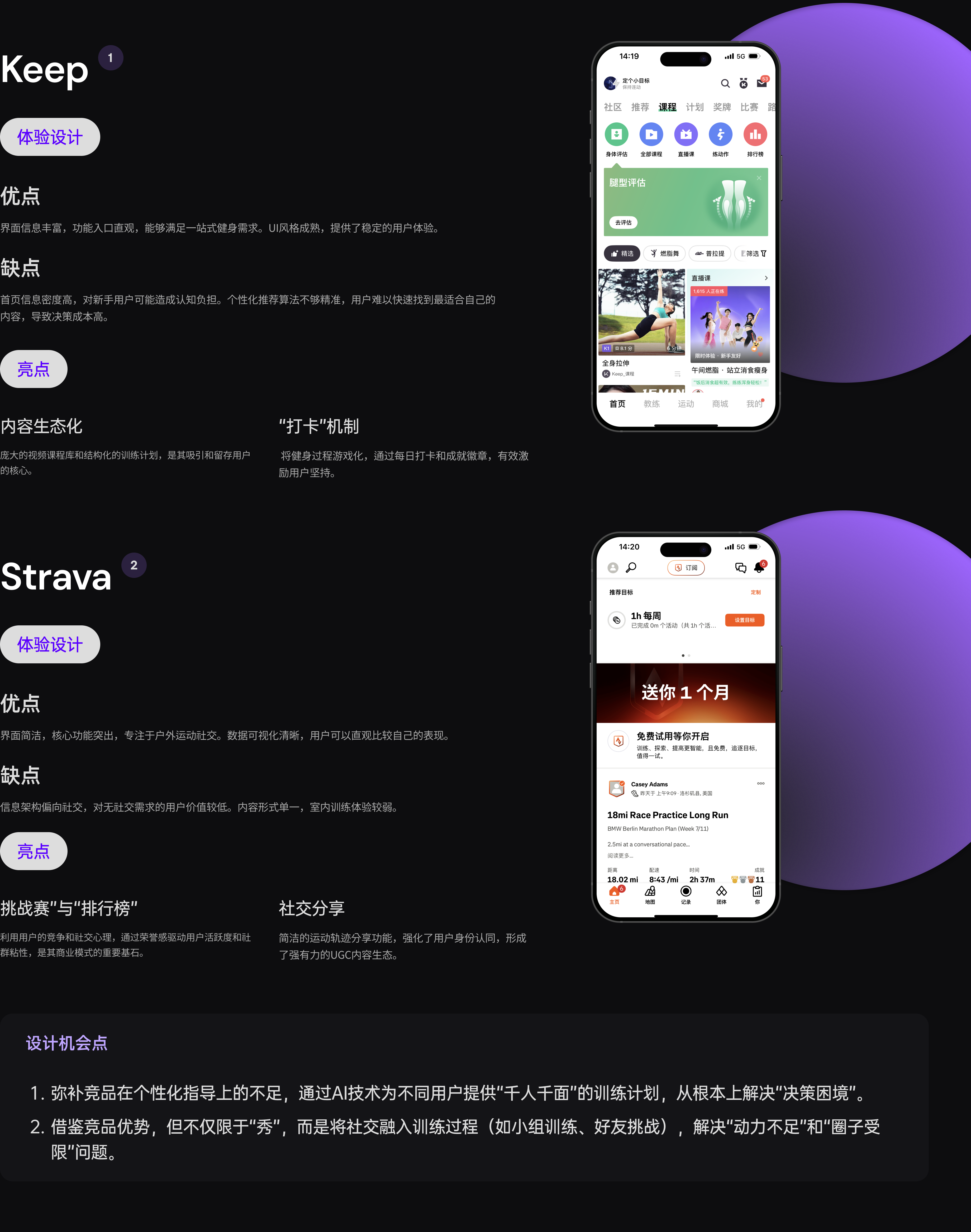
Where the category leaders leave a gap.头部产品留下的缺口。

I pulled apart Keep and Strava — not for feature lists, but for what they don't do well. The opportunities at the bottom of this analysis became the spine of everything after. 我把 Keep 和 Strava 拆开看 —— 不是抄功能清单,是找它们做得不够的地方。这页底部的设计机会点,成了后面所有设计的主线。

Competitive analysis of Keep and Strava with derived design opportunities Keep 与 Strava 竞品分析及推导出的设计机会点
04 — Strategy04 — 设计策略

From the gap to a few bets.从缺口,收敛成几个押注。

The analysis converged into a small, prioritized set of goals — the hinge between research and screens. Every screen that follows traces back to one of them. 分析收敛成一组排过序的目标 —— 这是研究和界面之间的转轴。后面每一屏,都能回溯到其中之一。

Goal 1目标 1

Optimize Core Experience优化核心体验

Enhance user efficiency and trust提升用户效率与信任

Strategy策略
  1. AI-powered personalizationAI 驱动的个性化推荐
  2. Clear information hierarchy and navigation清晰的信息层级与导航
  3. Real-time, intuitive data tracking实时且直观的数据追踪
Goal 2目标 2

Strengthen Social Incentives强化社交激励

Increase user stickiness增强用户粘性

Strategy策略
  1. Leaderboards and challenges排行榜与挑战赛设计
  2. Activity feeds, sharing, and interaction用户动态分享与互动
  3. Location-based communities地理位置社群功能
Goal 3目标 3

Develop Monetization Pathways构建付费路径

Drive business growth驱动商业增长

Strategy策略
  1. Differentiated features for conversion功能差异化,引导付费转化
  2. Early exposure to premium value增值服务前置,激发付费意愿
  3. Visualization of paid benefits可视化数据权益,强化付费价值
05 — Architecture05 — 信息架构

The structure underneath.界面底下的结构。

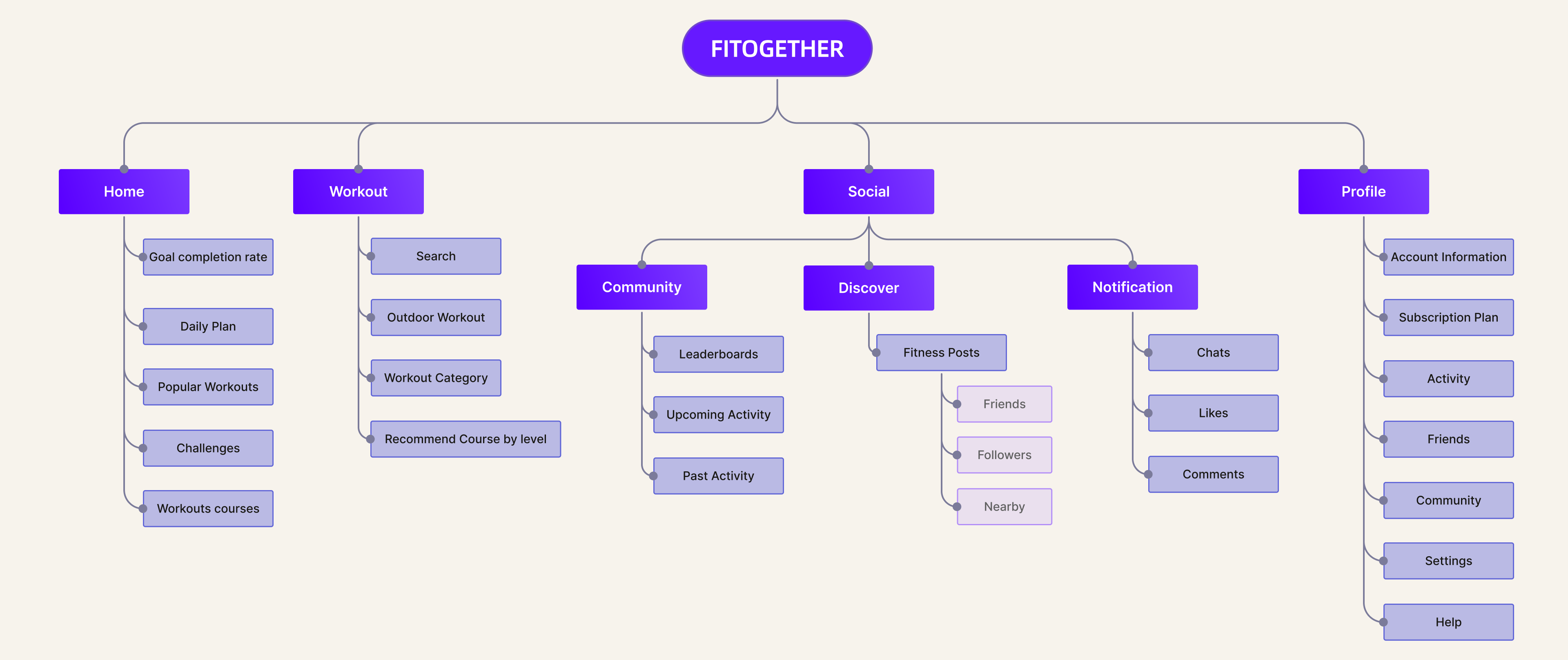
The whole product mapped as one structure tree, before any UI. Getting the architecture right first is what kept the later screens from sprawling into a pile of disconnected features. 动手做界面之前,先把整个产品的结构理成一棵树。结构在前面定清楚,后面那些页面才不会散成一堆零散的功能。

Information architecture tree for FitTogether
06 — Core Flow06 — 核心流程

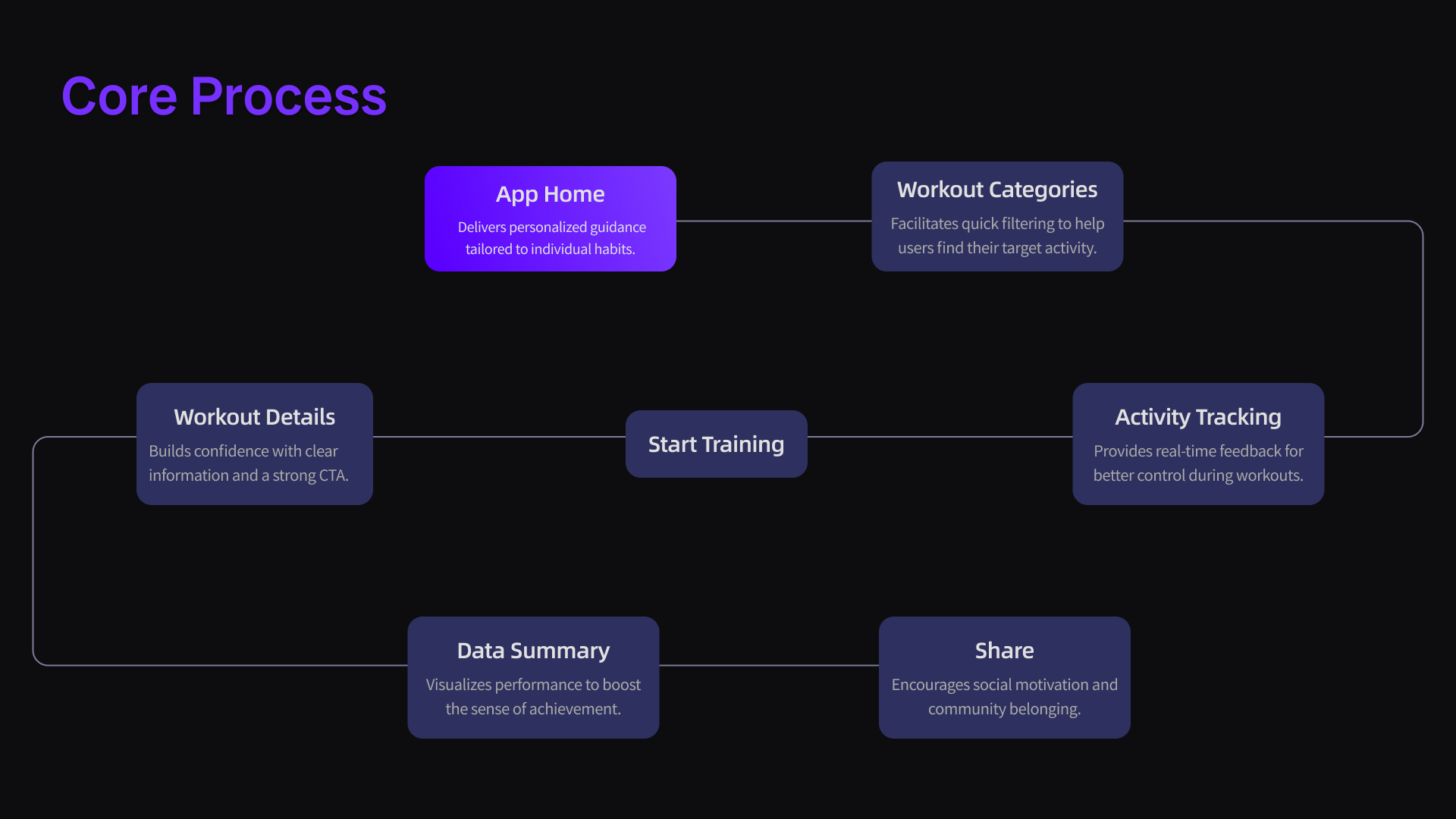
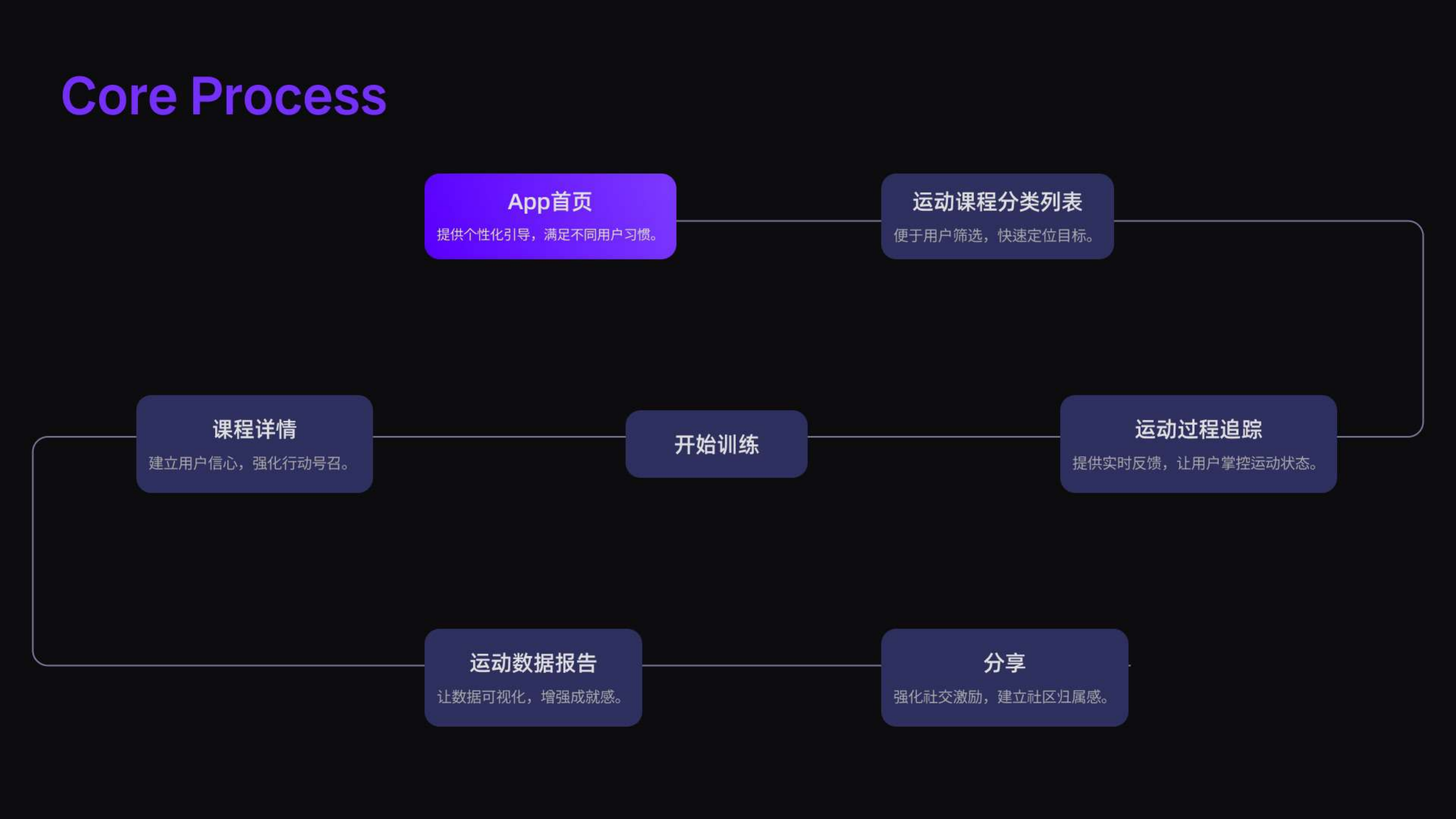
The whole product is one loop.整个产品,就是一个循环。

Drawing the loop explicitly — before the screens — is how I decided what each screen had to carry, and what to leave out. 把这个循环明确画出来 —— 在做屏之前 —— 我才定得下每一屏要扛什么、不扛什么。

Core process loop from app home to sharing 从首页到分享的核心流程循环
07 — Screens07 — 关键界面

The screens, and the calls behind them.这些界面,和背后的判断。

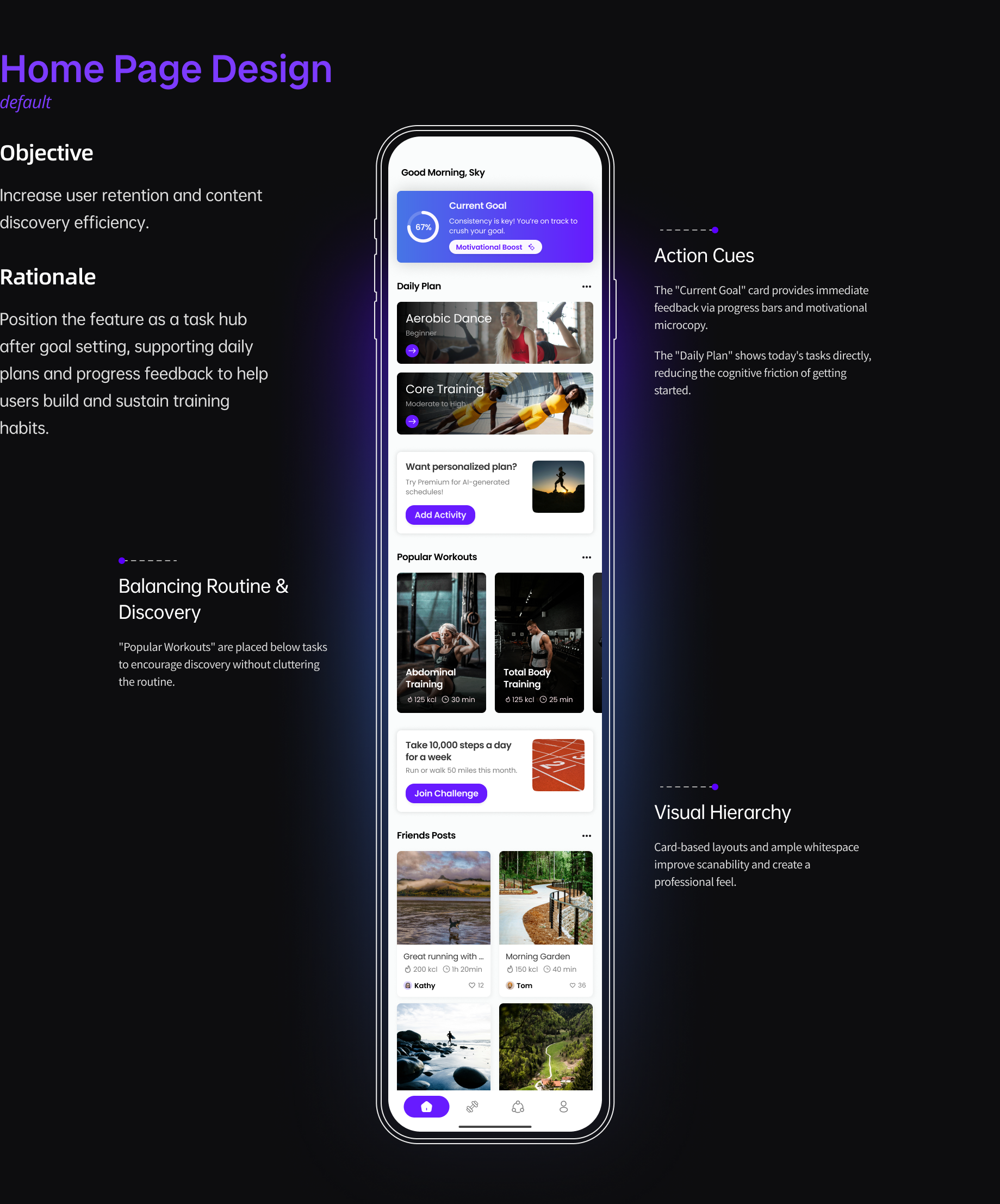
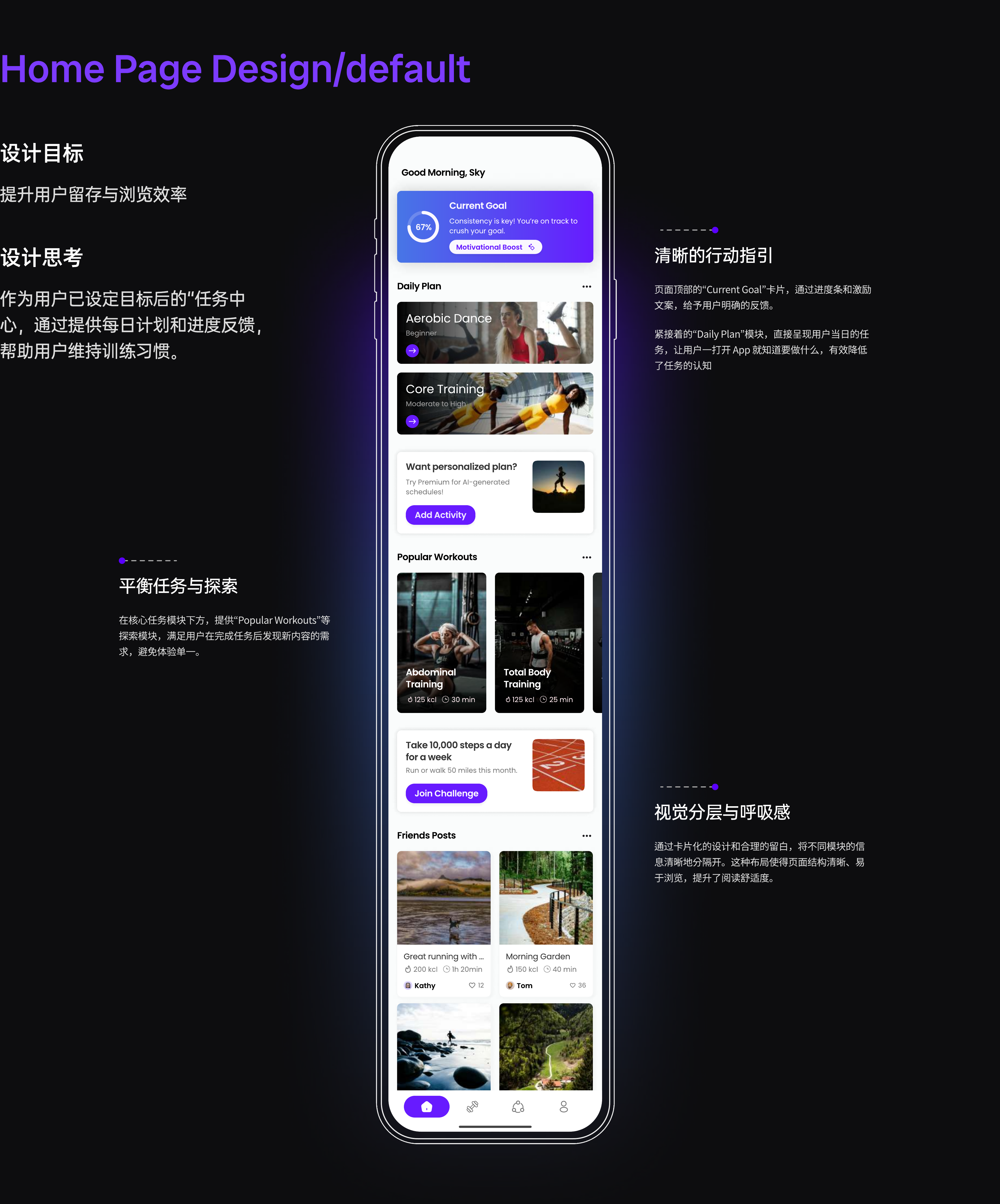
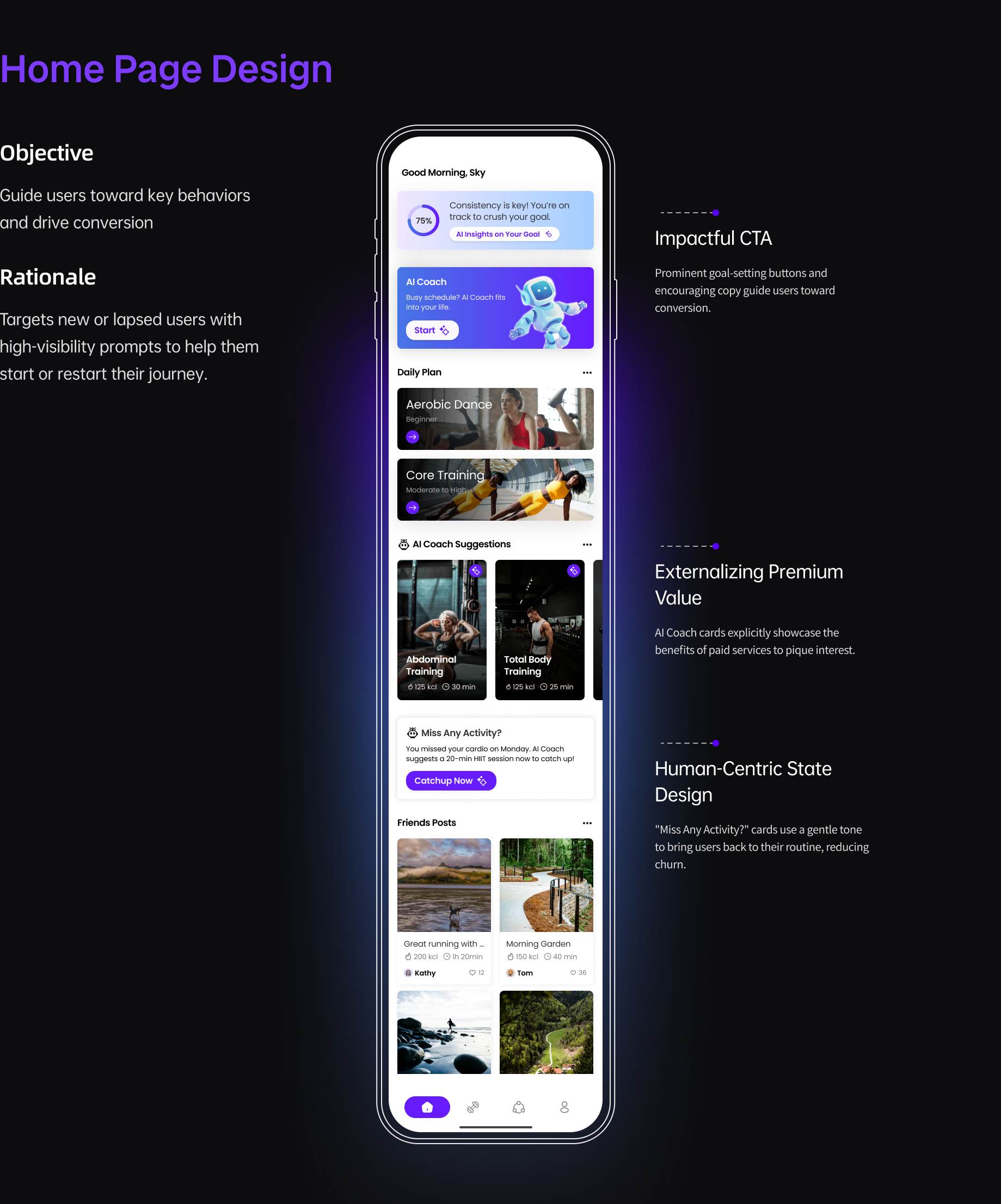
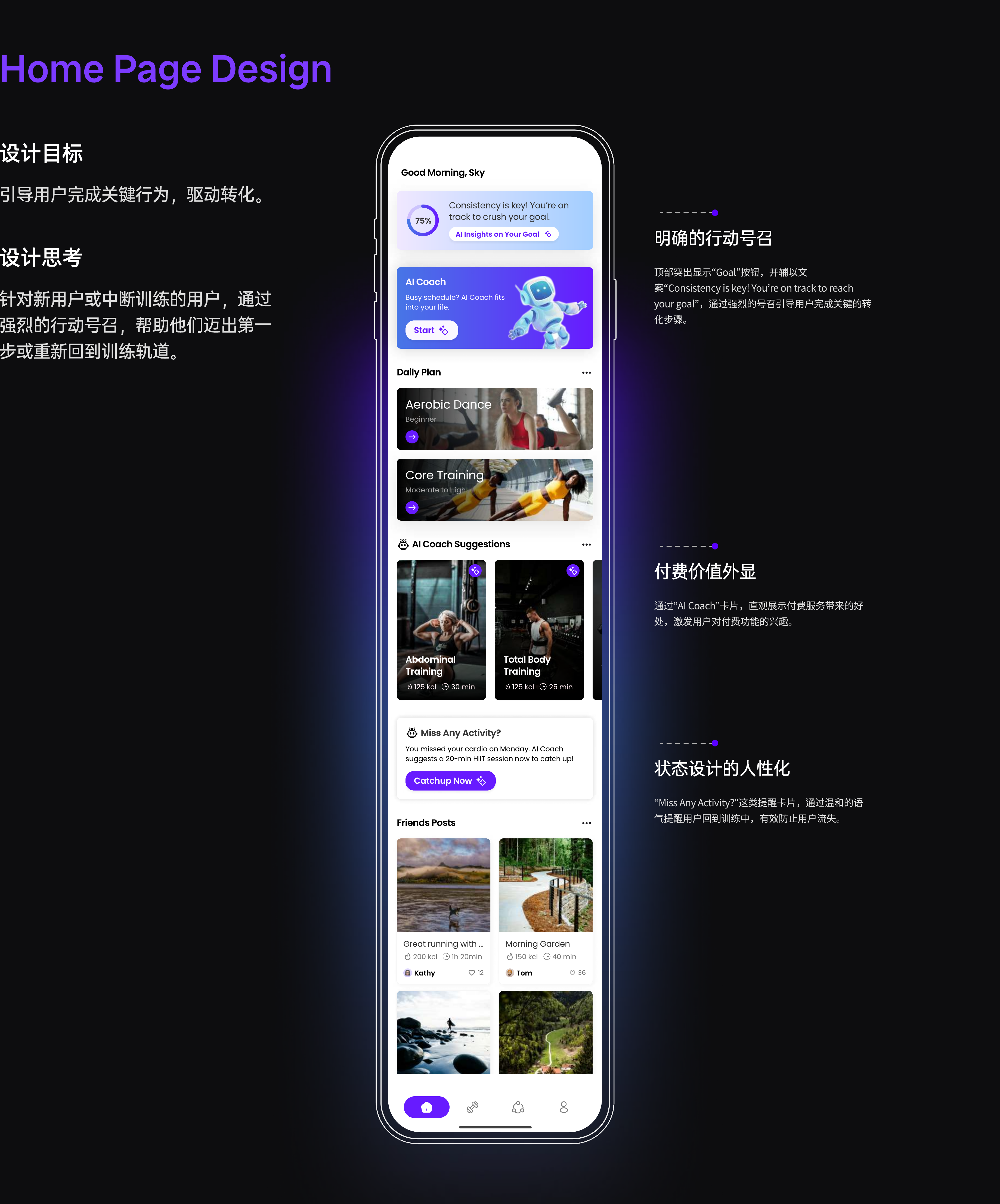
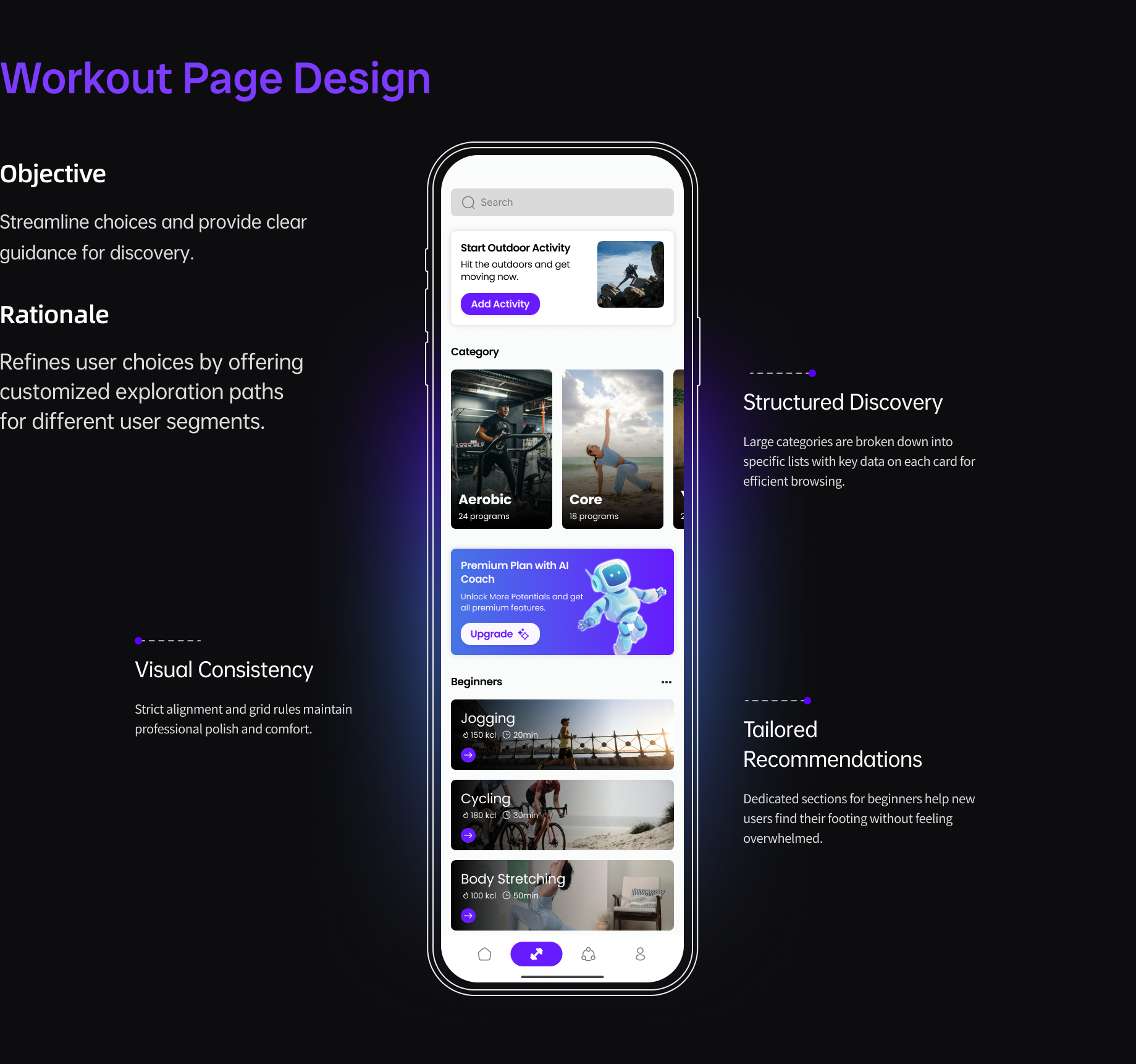
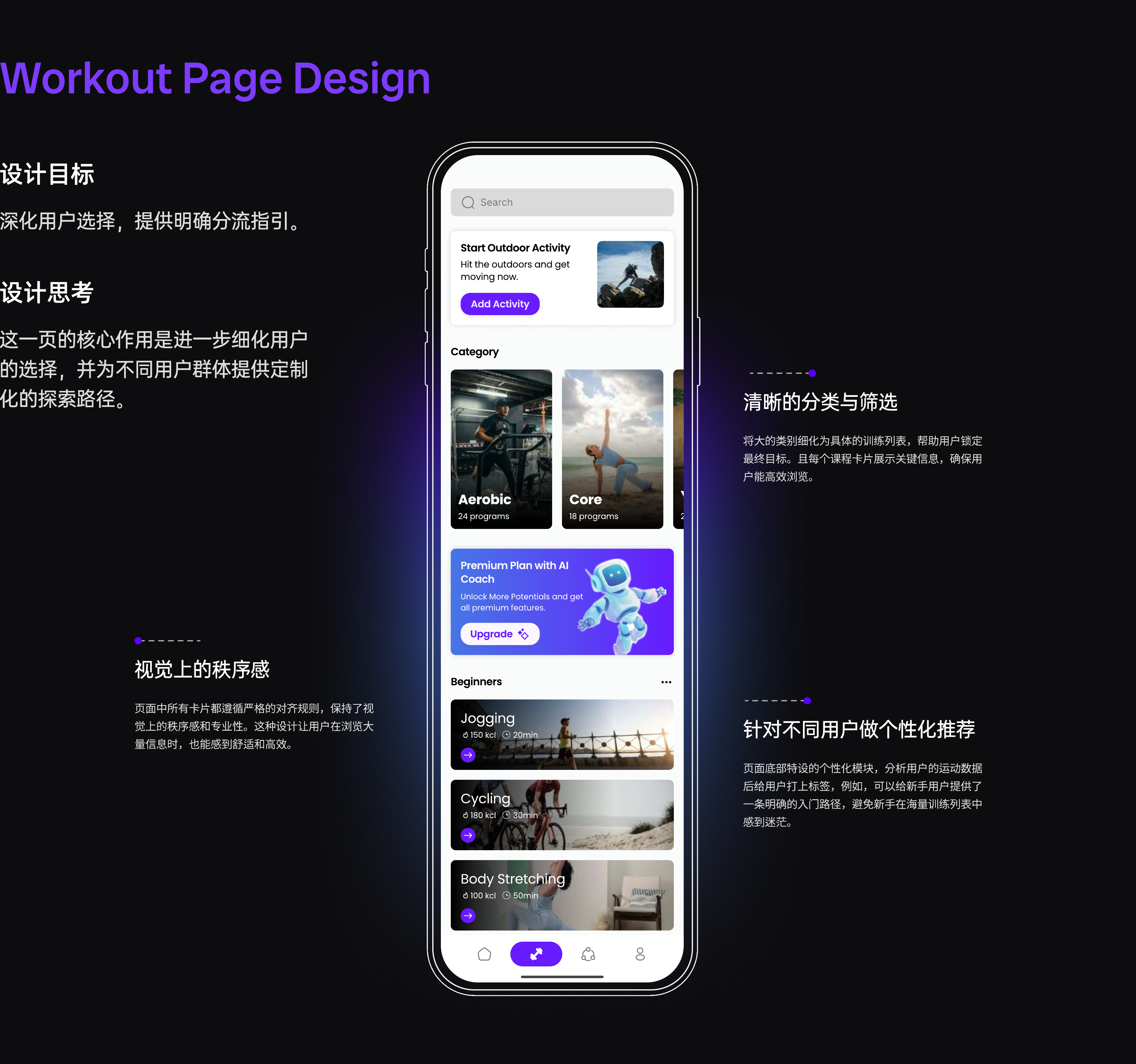
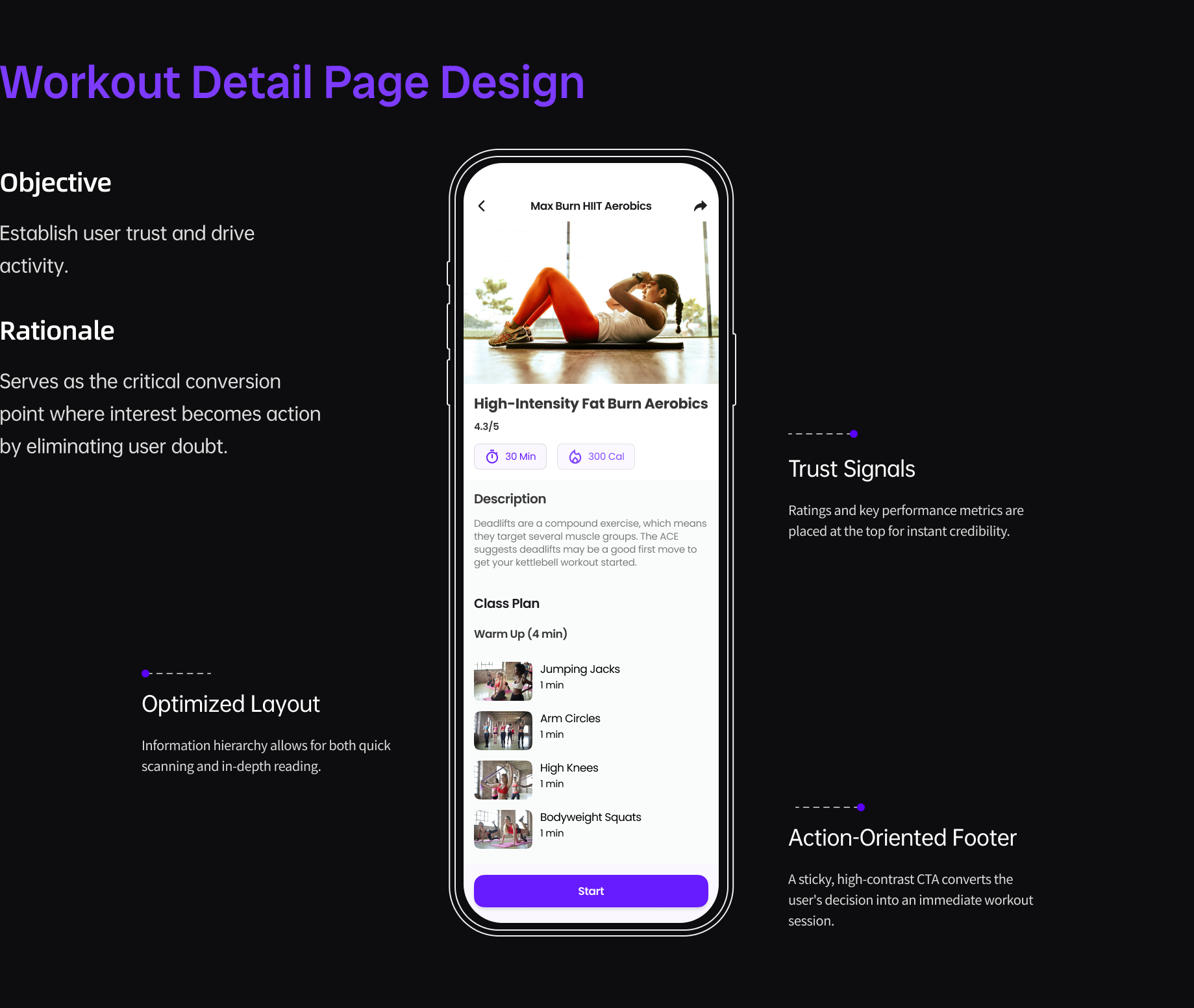
Each screen below carries its own objective and reasoning — read those inside the frames. Here I'll only add the one thing the images can't show on their own: why the home screen changed. 下面每一屏都带着自己的目标和思路 —— 那些看图里就好。这里我只补一件图自己说不清的事:首页为什么改。

Why the home changed. The default home was tuned for browsing — it answered “what do I do next.” But browsing alone doesn't move people to act. v2 introduces the AI Coach card: it turns the home from a place you scroll into a place you start, and surfaces paid value inside that same moment. 首页为什么改。 默认首页是为“浏览”调的 —— 它回答“下一步做什么”。但光浏览不会推动用户行动。v2 加入了 AI Coach 卡片:把首页从“刷一刷”变成“开始练”,并在同一个动作里把付费价值露出来。

Home page v1, default version tuned for browsing 首页 v1 默认版,为浏览优化
v1 · Default home · 默认首页
Home page v2 with the AI Coach card driving conversion 首页 v2,引入 AI Coach 卡片驱动转化
v2 · AI Coach home · AI Coach 版
Browse & filter浏览与筛选
Workout page: structured discovery and tailored recommendations 训练页:清晰分类筛选与个性化推荐
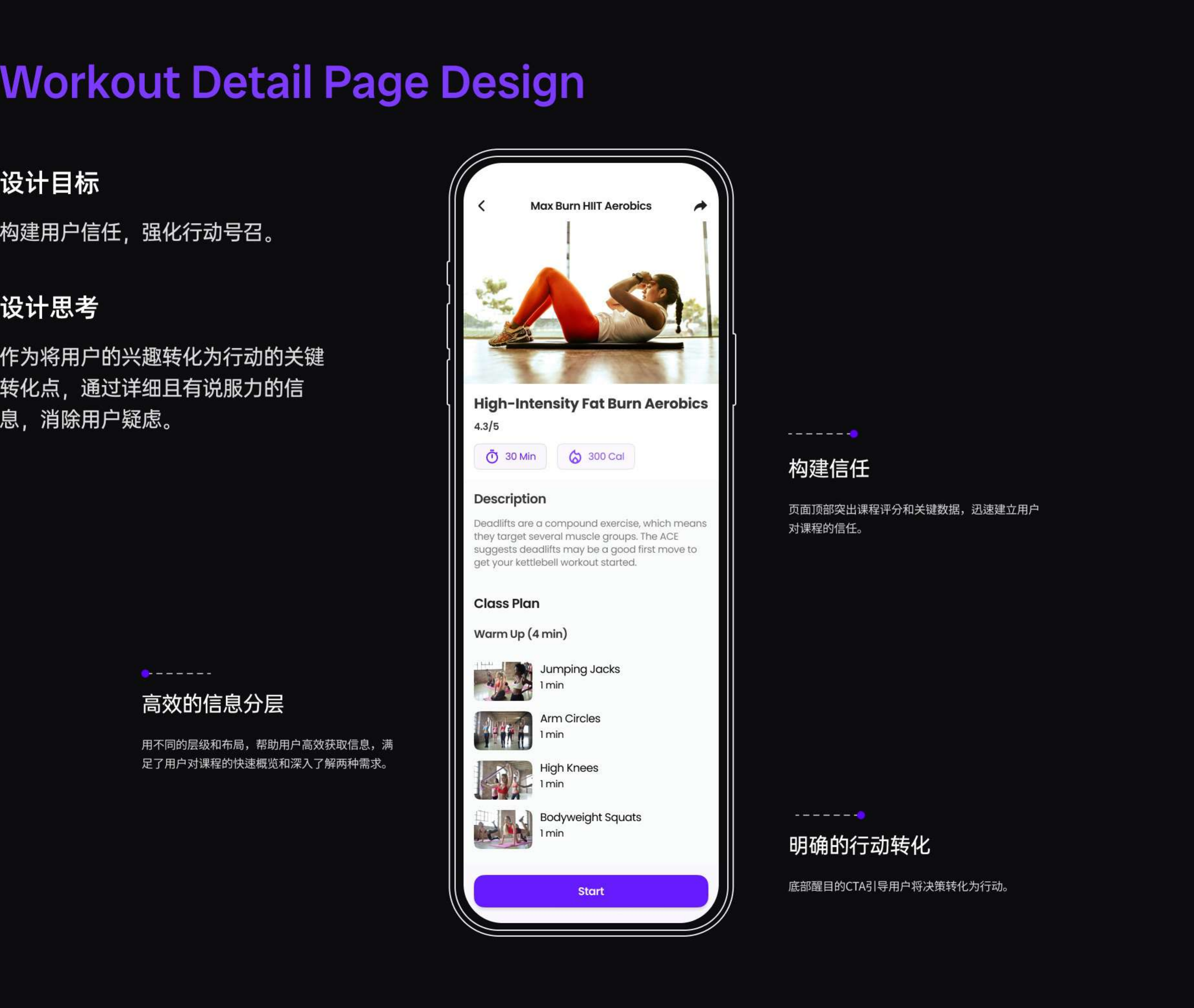
Detail & trust详情与信任
Workout detail page: trust signals and an action-oriented footer 训练详情页:信任信号与行动转化
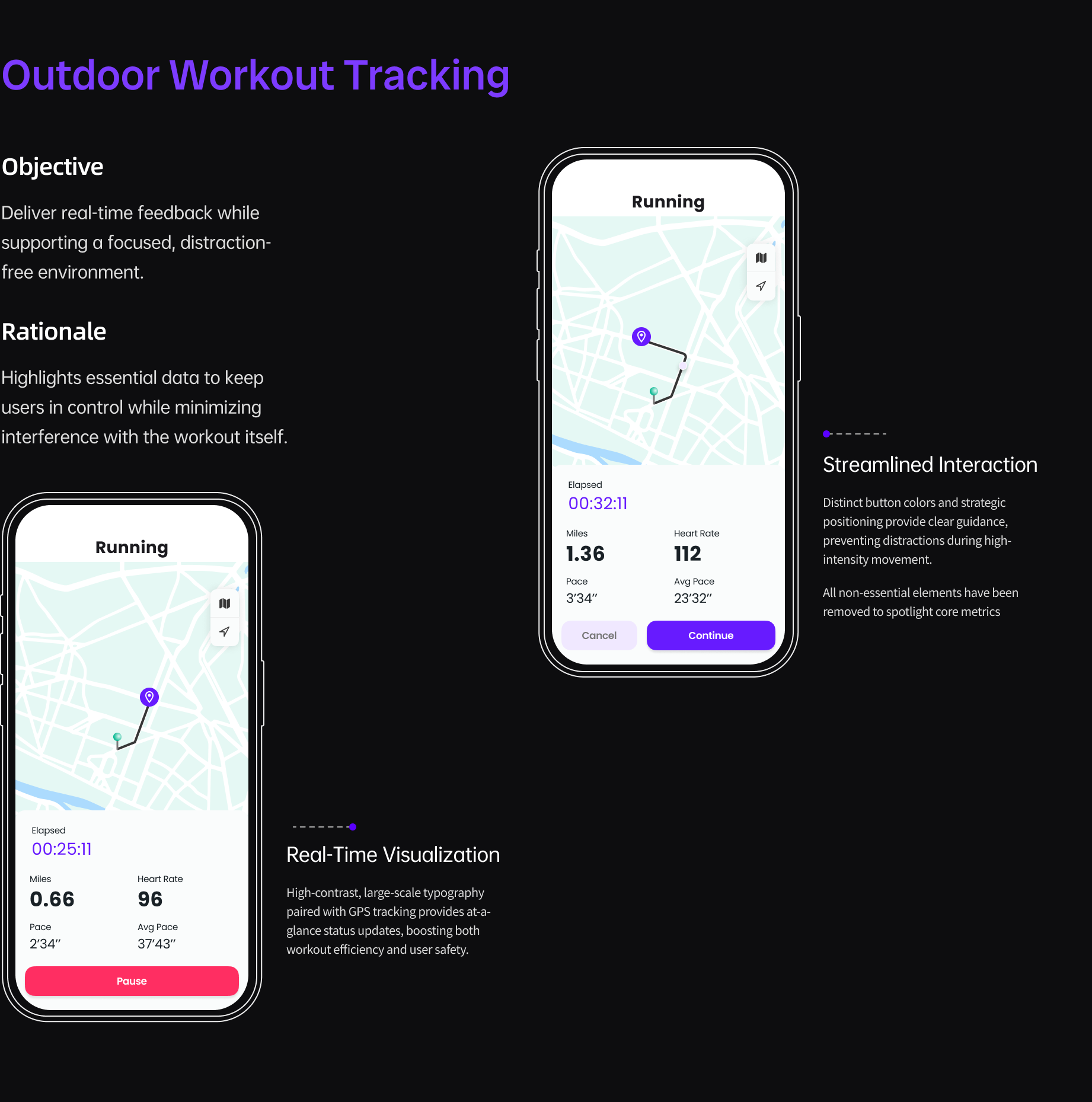
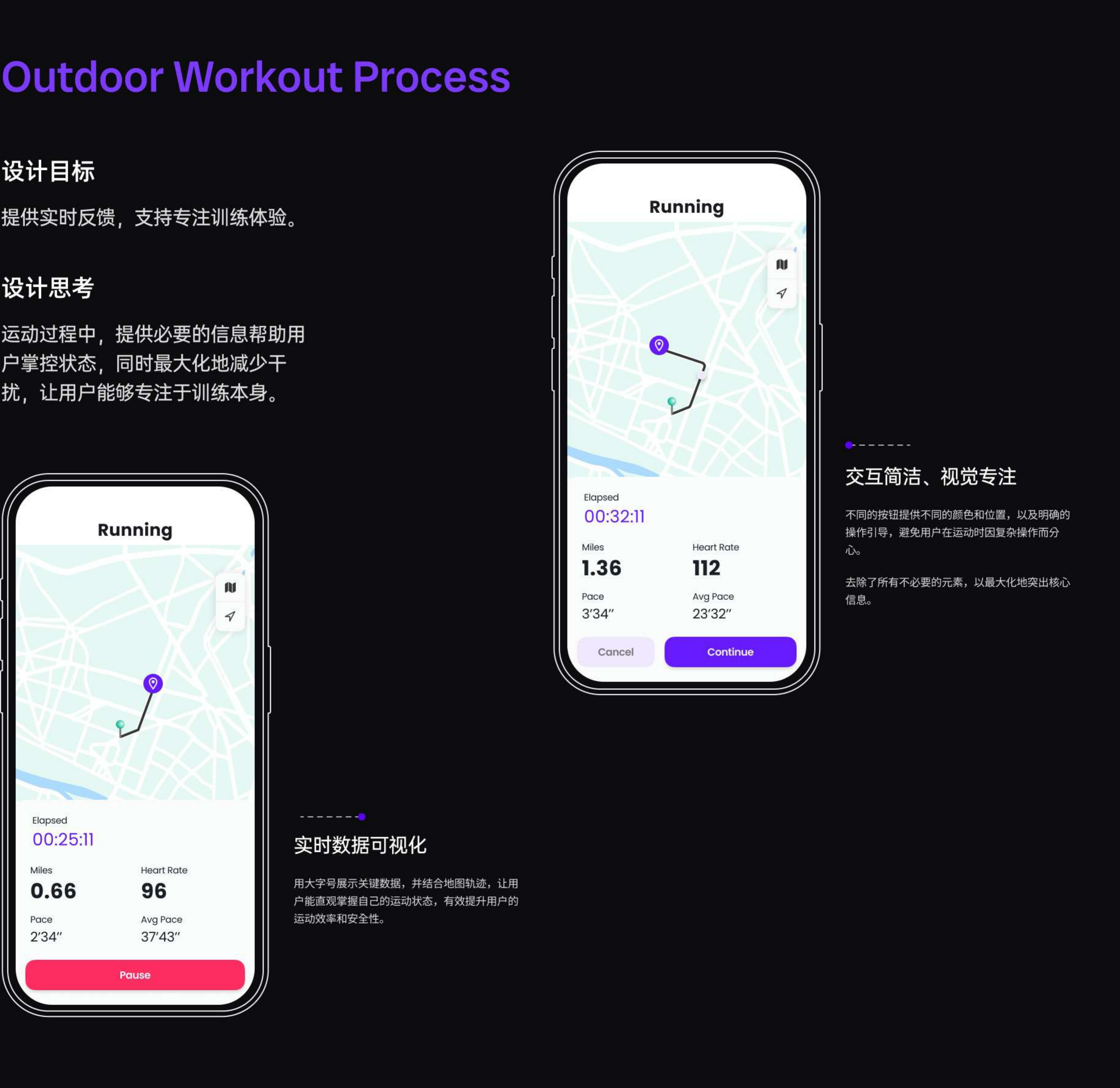
Live tracking实时追踪
Outdoor workout tracking: real-time data, distraction-free 户外训练追踪:实时数据,减少干扰
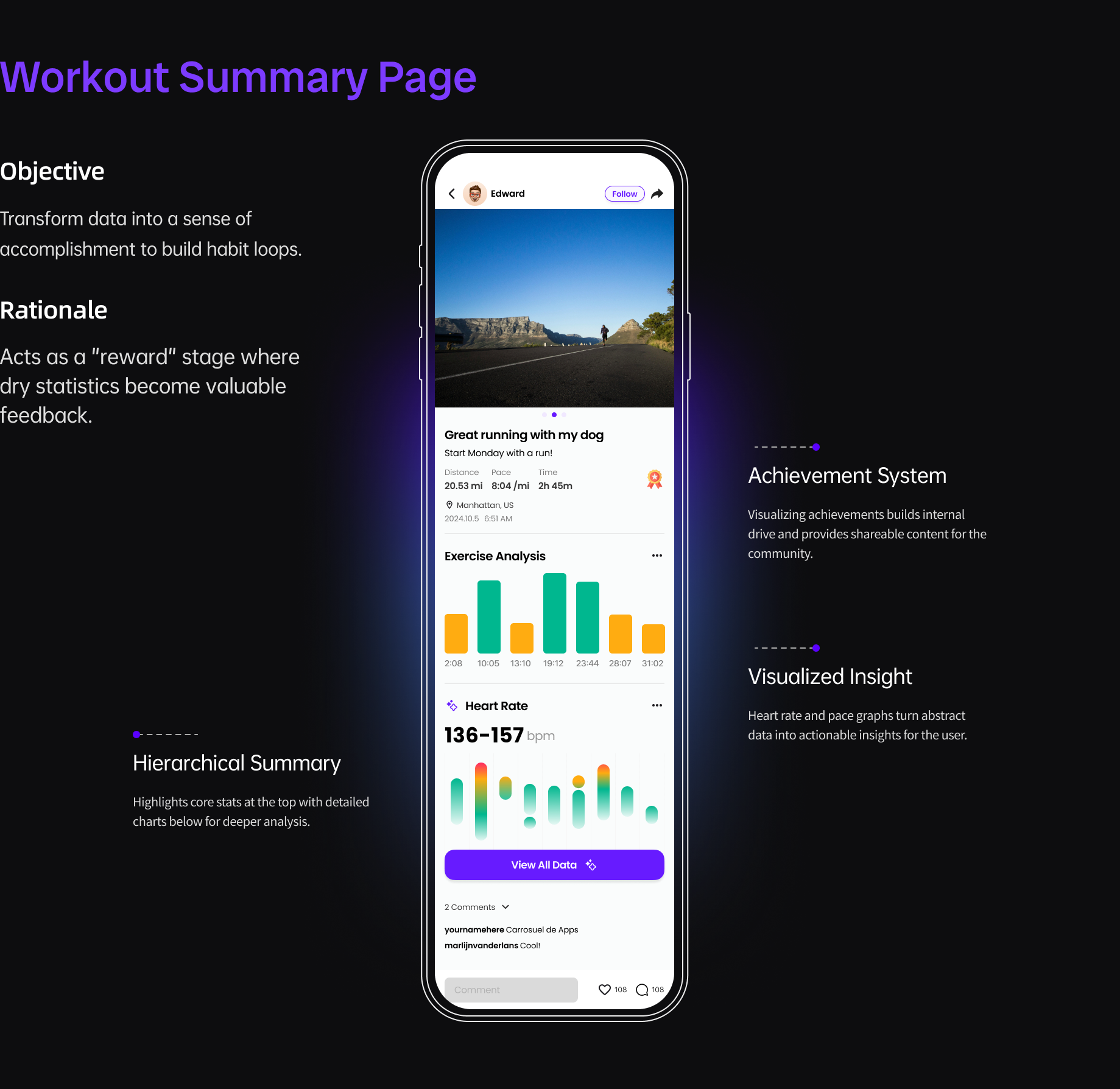
Post-workout训练之后
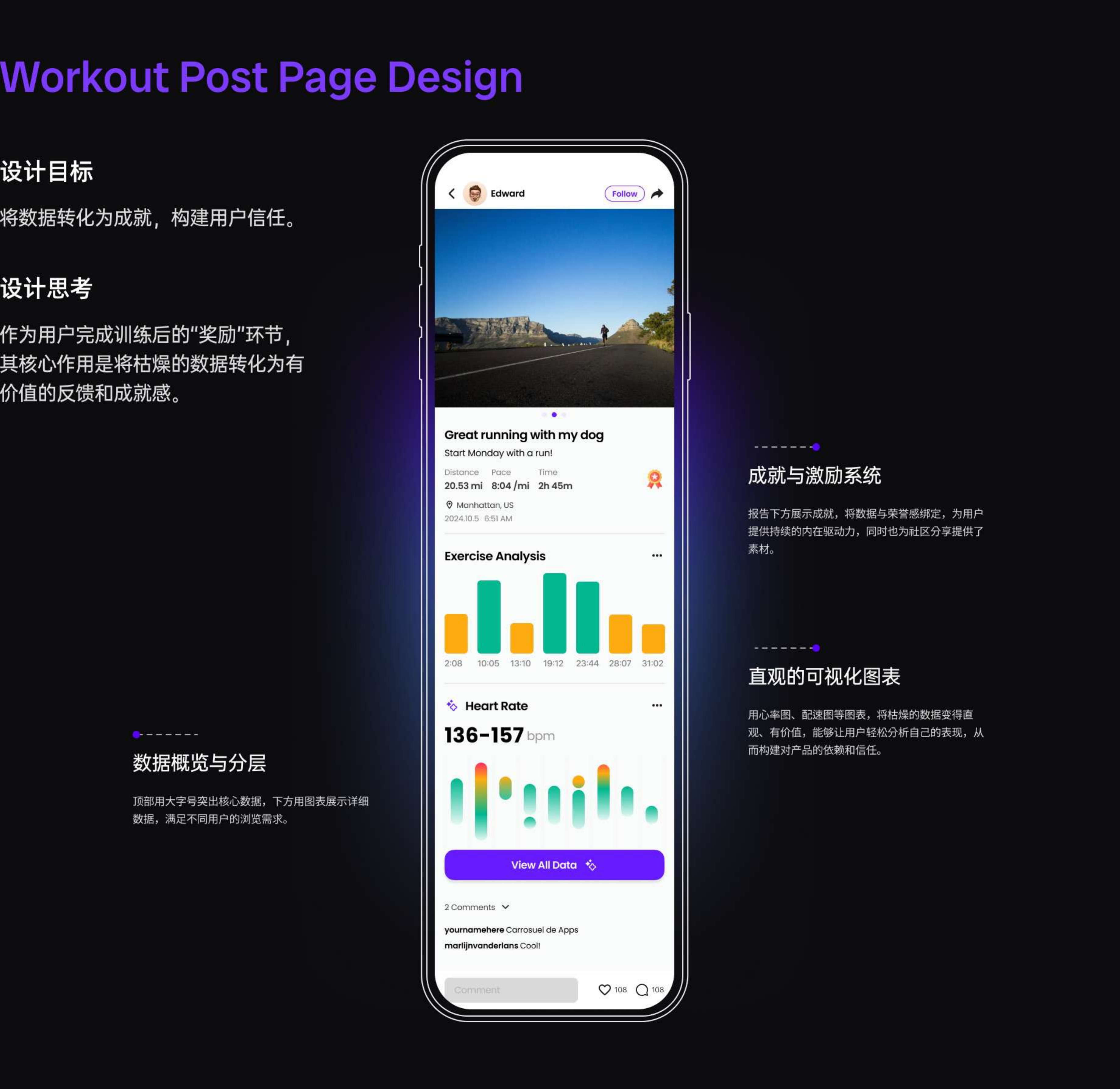
Workout summary page: turning data into achievement and shareable content 训练总结页:把数据转化为成就与可分享内容
08 — Summary08 — 总结

What this case actually proves.这个案例真正能证明的。

Four conclusions, one through-line — reason from the user, not from a pile of features. 四条结论,一条主线——从用户出发推导,而不是从功能堆叠。

User Insights用户洞察

A flexible information hierarchy accommodates diverse users, from beginners to busy professionals.健身用户群体差异很大(初学者、健身达人、上班族、宝妈等),信息架构和引导流程需要保持灵活。

Long-term consistency is fueled by goal tracking and social accountability, not just exercise instructions.用户的持续动力往往来自目标追踪和社交支持,设计不能只强调锻炼动作本身。

Experience Flow体验流程

Users are usually “on the go,” so the flow needs minimal steps to reach their primary activity fast.用户大多处于“运动中”或“准备运动”的状态,交互要尽量减少步骤、快速直达。

Background features like coaching cues and data recording have to keep running to prevent app fatigue.音乐播放、数据记录、AI 教练提示等功能要考虑后台运行,避免用户频繁切换应用。

Monetization & Strategy功能与商业化结合

The challenge is surfacing premium features — analysis, AI coaching, challenges — without disrupting the core experience.如何在不打扰用户的前提下,展示订阅或付费功能(高级分析、AI 教练、社区挑战)是一大挑战。

A tiered approach offers foundational data for free, then gradually reveals advanced premium value.用渐进式解锁引导转化:先提供免费基础数据,再逐步展示更详细的高级功能。

Reflections设计反思

Success is the appeal of the “30th workout” — long-term habit formation over a strong first impression.健身高频但容易流失,设计不仅要关注“第一次使用”,更要关注“第 30 次使用”是否依然有吸引力。

High-value design prioritizes findability and simplicity over a feature-heavy, complex interface.用户最常抱怨的不是功能不够多,而是“太复杂 / 找不到入口”——简洁和清晰始终是第一优先级。